


Burnout and Nervous System Awareness — Finding a Way That Works Without Constantly Pushing Through

Updated: Jul 9
This is Part 9 of the Foundations Series —
a reminder that burnout isn’t failure — often it’s what happens when life has been asking more than your system has had room to hold.
If you're new to this series, you're welcome to continue reading here. If you'd prefer to begin at the start, Part 1 is here.

Burnout isn’t just tiredness.
It can happen when your nervous system has been trying to protect you for a long time —
when you’ve been trying to function in conditions that weren’t really supporting you,
when life has been asking a lot and there hasn’t been enough space to properly rest,
or when pushing through has become more familiar than responding to what you actually need.
You might notice:
finding it harder to focus
feeling more emotional or more irritable
feeling more reactive, or more easily overwhelmed
feeling drained even after sleep
simple tasks feeling heavier than they used to
None of this means you’re weak.
It means your system has been trying to keep going under too much unnecessary pressure for too long —
and it’s signalling for more support, less pushing through, and a way of doing things that feels more sustainable.
Life can start to feel unworkable when too much has been been going on for too long, without enough chance to reset, recover, or do things differently.
🗒️ Why Burnout Often Goes Unnoticed
Most of us were taught to keep going:
Be fine.
Hold it together.
Keep pushing.
Don’t make a fuss.
So we do.
We stay busy.
We override the signals that something isn’t quite right — and over time, we lose touch with what we actually need.
We get used to functioning on less than we should have to.
And often burnout only becomes obvious in hindsight —
when everything feels like too much,
or when your mind says “keep going”
but your body says “no”.
Recognising this isn’t failure.
Often, burnout starts to make more sense when you understand what your nervous system has been trying to manage.
And from there, you may be able to see what’s really happening — with more honesty, and less self-blame.
🗒️ The Turning Point
Naming what’s really happening can be a turning point.
When you can see what’s really happening, something begins to shift.
Instead of:
Why can’t I just get on with this?
You start to hear:
My system is overwhelmed.
Instead of:
I’m failing.
You begin to see:
My body is asking for care.
Burnout isn’t a flaw.
Often, it’s your body showing you that something about the way life has been functioning needs attention.
It can be a message that something in you, or around you, needs more space, rest, support, or something to change.
Awareness creates the first bit of space to respond differently.
And from there, a different response can begin to feel possible.
🗒️ Burnout and Nervous System Awareness — Finding a Way That Works
This isn’t about “getting back to normal.”
It’s about finding a way of living that doesn’t keep asking you to override yourself.
With more honesty about what’s actually helping,
what quiet pressure may already be influencing how you respond,
and what no longer works in the same way.
This isn’t about avoiding what’s hard.
It’s about being able to meet it without constantly overriding yourself.
That might look like:
choosing smaller or more realistic commitments
noticing what leaves you drained — and what helps you feel steadier
questioning the pressure to keep going when something in you is already saying “enough”
paying attention to the patterns around rest, energy, and expectation
making more room for what actually helps, even if it seems small
These may not look like big changes.
But they can begin to change how life feels day to day.
🗒️ A Gentle Reminder
If you recognise yourself here —
or you’re in burnout right now — please know:
Things can change over time.
Not all at once.
Not perfectly.
But in ways that can start to make life feel more workable again.
Even if that feels hard to believe right now, this moment is not the whole story.
You don’t need a full plan.
You don’t need to fix everything.
You don’t need to become someone new.
You may only be able to notice what feels like too much right now —
and what might need to be different, even slightly.
You don’t have to act on everything at once.
Sometimes it starts with simply seeing things a little more clearly:
what keeps pushing you past your limits
what keeps adding pressure
and what helps life feel a little more workable.
This work isn’t about avoiding hard things.
It’s about noticing where unnecessary pressure keeps building — in our bodies, homes, relationships, and systems — and finding ways to move through life without constantly overriding ourselves.
Your worth isn’t measured by how much you can do. And there is no deadline for finding a way that feels more workable.
🧭 That was Part 9 — the closing thread of the Foundations Series.
You can revisit any part of this 🔗 Series in your own time.
🧭 Where To Go Next:
🔗 Making Life Workable — see what this looks like in everyday life.
🔗 Browse by Experience — explore what feels most familiar.
🔗 A Note From Jen — pause with a reflection that may put words to what you've been feeling.
🔗 Find What Fits — explore resources, support and practical next steps.
If you’d like to hear when new resources are shared, you can 🔗 get updates by email.
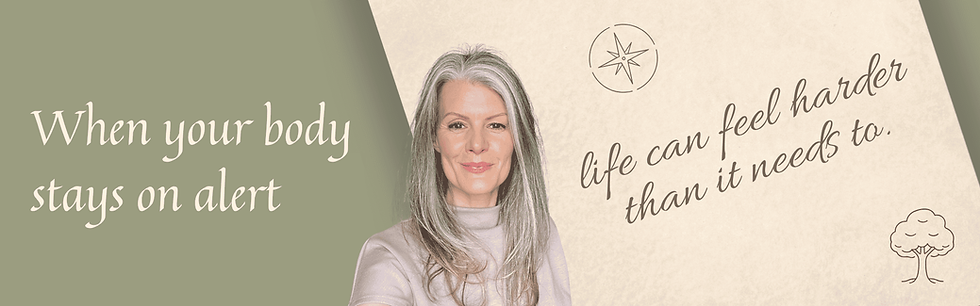
This sits within Your Nervous System — how your body responds, and what helps it feel steadier.
Your body isn’t working against you. It’s responding.
The Foundations for Living Differently series draws on lived experience and research-informed perspectives to explore how the nervous system shapes how we feel, respond, and move through life.
It’s shared to support understanding — not diagnosis or treatment.
You can read our full Note of Care & Responsibility →
Whatever brought you here today, I hope you leave with something that helps life make a little more sense, or perhaps opens the door to something you hadn't noticed before.




Comments